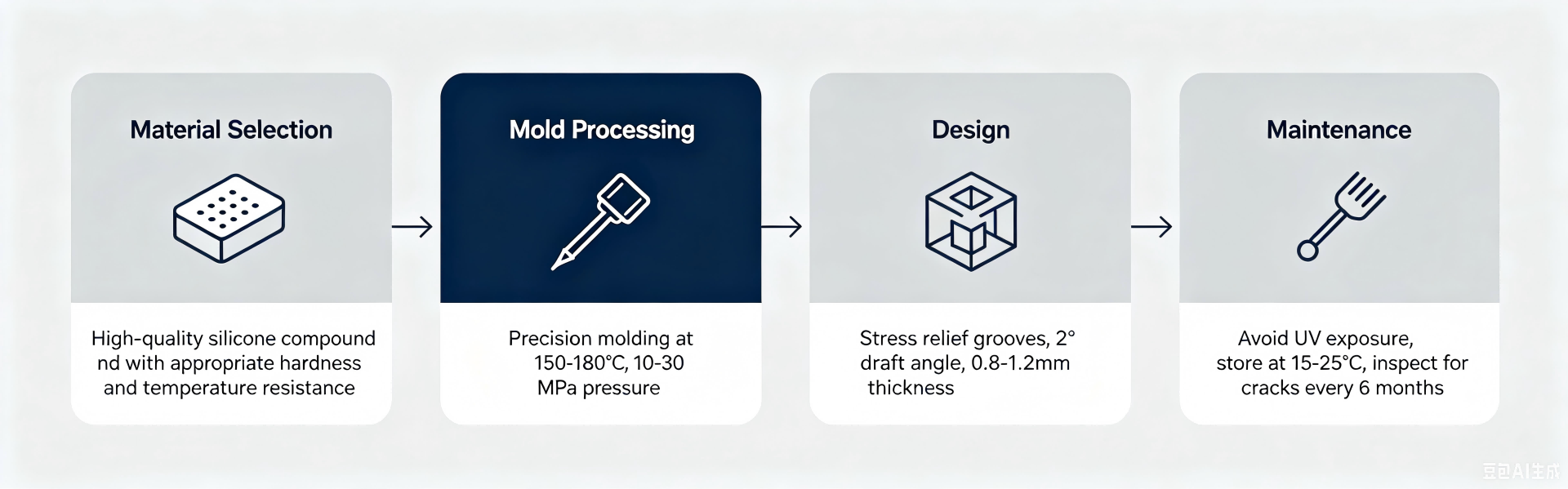
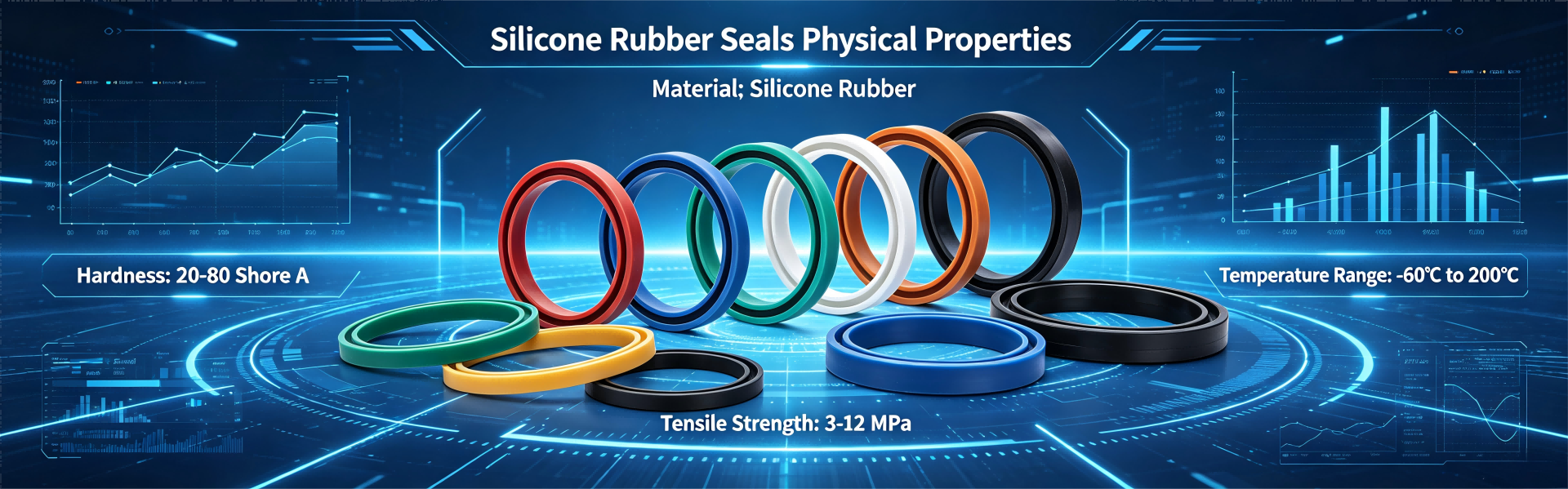
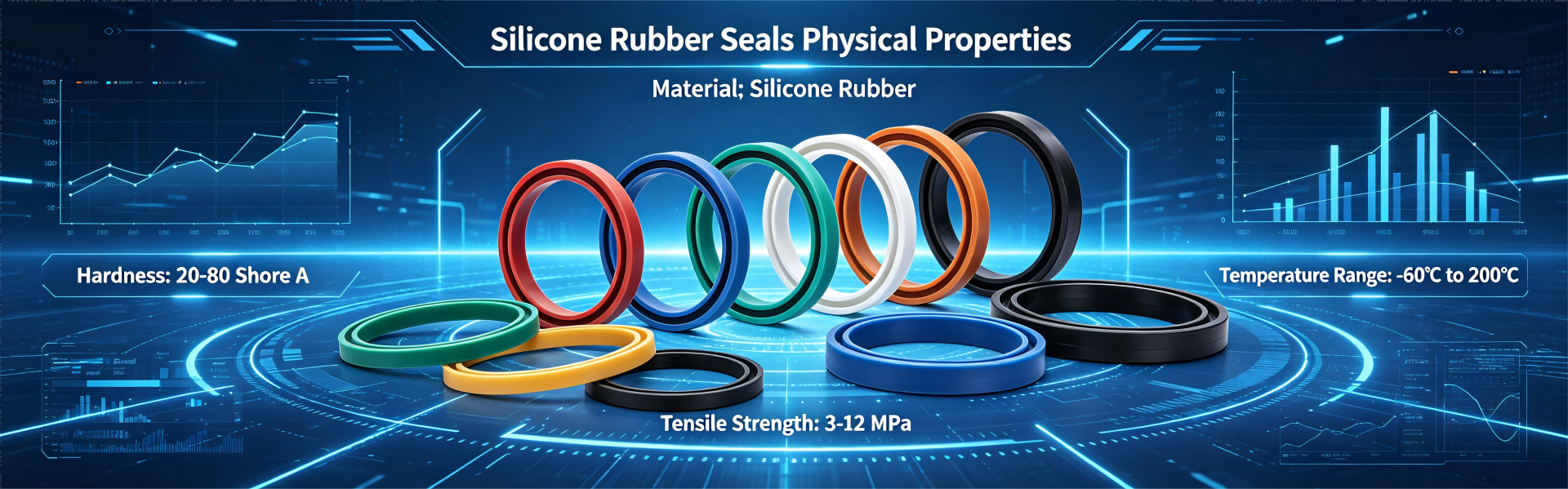
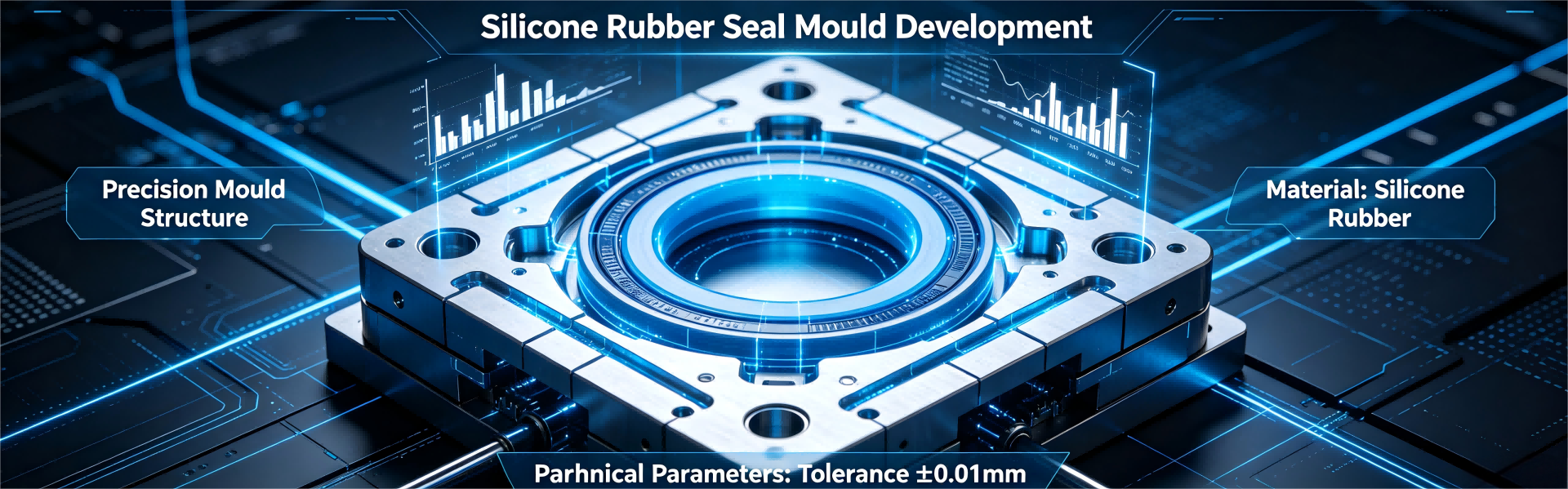
Silicone rubber seals are essential industrial sealing components for mecha guannical and hydraulic equipment. Rubber seal failure often leads to equipment leakage, reduced efficiency and unexpected downtime. This article analyzes the main silicone rubber seal failure modes and root causes from materials, structural design and mold processing, providing professional guidance for rubber seal mold manufacturing, product selection and quality improvement.
Main Failure Modes of Rubber Seals
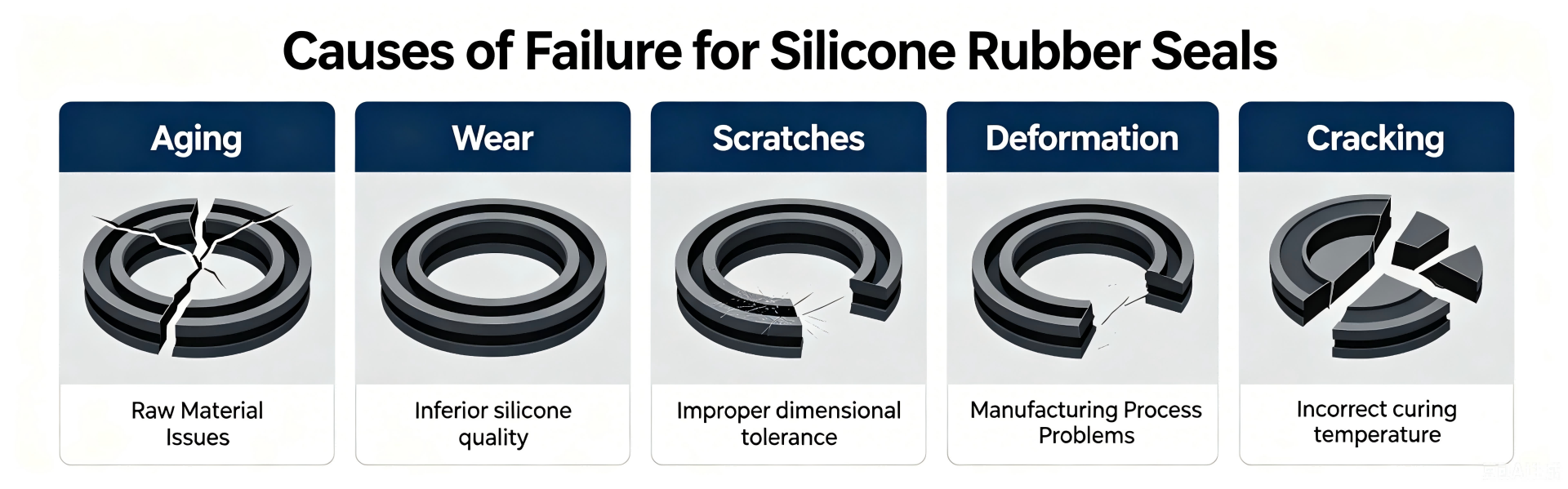
Rubber seals mainly fail in five forms: aging, wear, scratch, permanent deformation and cracking.
Aging Failure
Rubber aging failure is triggered by molecular degradation and excessive cross-linking of rubber polymers under complex working conditions. Typical aging symptoms of silicone rubber seals include surface cracking, hardening, brittleness, stickiness, discoloration, mildew and chalking. This defect will weaken insulation and sealing performance significantly, and different rubber grades present distinct aging failure characteristics.
Wear Failure
Rubber seal wear failure mainly occurs in dynamic sealing structures with frequent reciprocating motion. The friction causes uneven surfaces and continuous material loss of silicone rubber seals, forming tiny sealing gaps and eventually leading to leakage and seal failure.
Scratch, Deformation and Cracking
Surface scratches on rubber seals are mainly caused by improper assembly and hard medium impurities. Long-term static compression produces irreversible permanent deformation, while alternating stress and thermal cycling easily cause body cracking, which are common auxiliary failure modes of silicone rubber sealing parts.
Root Causes of Seal Failure
Raw Material Problems
Improper material selection: Unmatched silicone rubber grades fail to meet operational standards of temperature resistance, pressure resistance and medium resistance, which is a primary cause of rubber seal premature failure in industrial applications.
Poor rubber quality: Impurity contamination in rubber compounding or excessive additives reduces the mechanical properties and aging resistance of raw materials. Inferior rubber formulas directly cause potential silicone seal failure risks.
Structural Design Defects
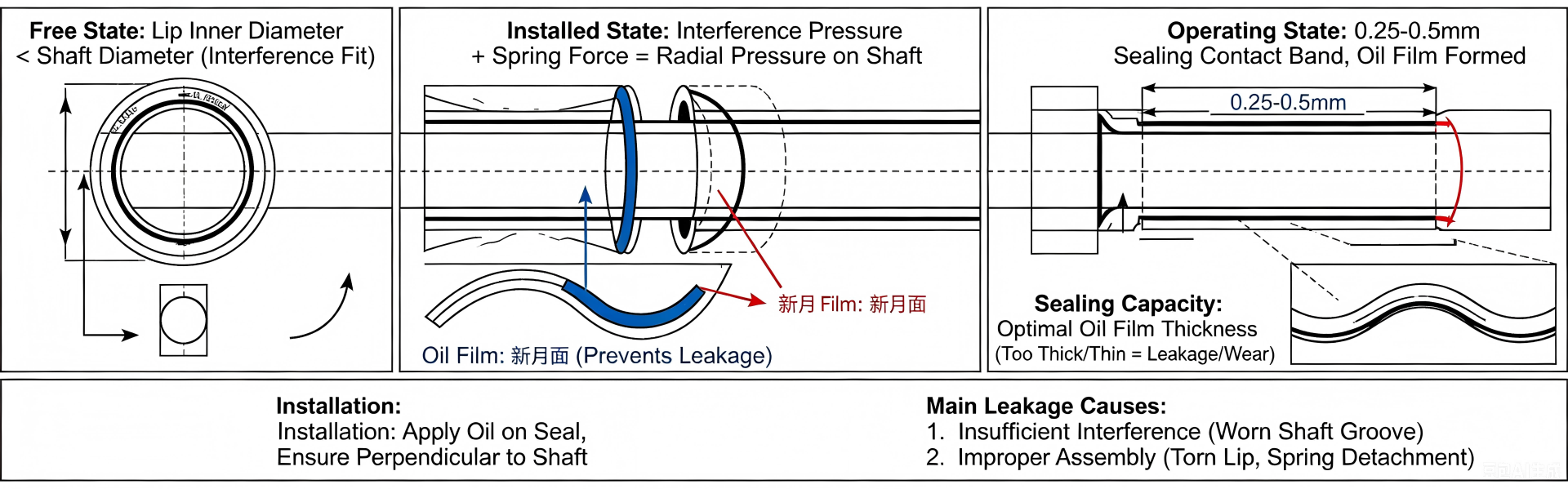
The sealing capacity of silicone rubber seals relies on reasonable compression deformation. Unreasonable structural design is a key factor leading to frequent rubber seal failure.
Insufficient compression: Mismatched seal section size and oversized mounting grooves cause inadequate pre-compression, resulting in low-pressure medium leakage and sealing failure.
Excessive compression: A common defect in dynamic seal design. Excessive compression squeezes out interfacial lubricants, causing dry friction and accelerated rubber seal wear.
Medium incompatibility: When silicone rubber seals contact incompatible oil, acid, alkali or organic solvents, swelling, bulging and softening occur, completely losing sealing performance.
Mold and Processing Defects
Appearance defects: Unqualifiedrubber seal mold processing causes burrs, flashes and micro cracks on seal surfaces, forming leakage channels after assembly.
Dimensional inaccuracy: Low mold manufacturing precision leads to unqualified seal dimensions and abnormal compression, failing to meet standard sealing design requirements.
Internal defects: Uneven rubber mixing and poor exhaust in vulcanization produce internal bubbles and delamination inside seals, causing cracking and pressure leakage in service.